Job card · Starter
Starter Replacement in Westminster
Call 720-358-9214Prove the starter guilty
Quality reman or new
Full restart cycle
Why Starters Get Misdiagnosed
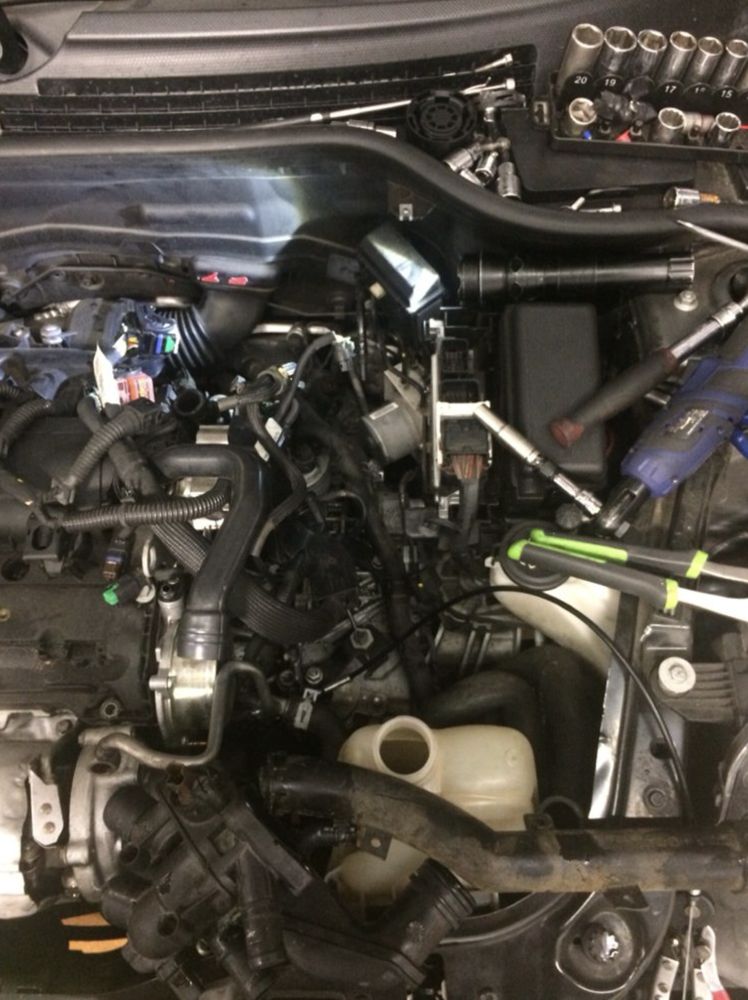
If this trade had a dollar for every healthy starter that arrived at a shop in a box, already purchased, while the real culprit sat corroded on a battery post, the shop would have paid for itself twice. A no-crank morning reads as a starter problem from the driver seat, and the parts counter is happy to agree. The meter usually isn't.
So the visit starts with the circuit, shop procedure intact: the battery proves itself under load, then the test confirms voltage actually reaches the starter terminals, that the solenoid signal shows up, and that the grounds are intact. If the starter itself has failed, the readings say so in plain numbers, and only then does a part get ordered. A single heavy clunk when you turn the key usually points to the starter, and testing confirms it before a part gets ordered.
Starter Replacement, Done Right
The truck fits new or properly remanufactured units built for your exact engine, because starter access on some of these motors is half the labor and nobody wants to do it twice. Mounting bolts torqued to spec (a loose starter chews ring gears, an expensive noise this trade gets paid to fix too often), connections cleaned and protected, and a full cycle of restart testing before the truck leaves your curb.
The removed unit waits for your inspection, the invoice names the part by number, and the work carries the usual warranty: if it acts up, the truck returns and makes it right. Same policy good shops have always run, now with better scenery.
Intermittent Starting Problems
Starters rarely die unannounced. The no-crank that "fixes itself" on the second key turn is a farewell letter in progress, and acting during the drafting stage puts the repair on your calendar instead of a parking lot's. The cheapest starter jobs are the ones booked a week early; the priciest ones all start with a stranded phone call.
Why Starters Quit in This Climate
Cold thickens oil, thick oil raises cranking effort, and every winter morning here asks the starter for more torque than its designers penciled in at sea level. Add the underhood heat of July, which bakes the solenoid contacts and windings, and Front Range starters live a boom-and-bust life that shortens their careers. None of that is your fault, and none of it is avoidable. What is avoidable is replacing one that still had years left because a corroded ground was hogging the voltage, which is precisely what the testing exists to prevent.
What the Visit Looks Like
Plan on a phone quote, an arrival window, and then roughly one to three hours at the car depending on where your engine hides its starter. Some sit right on top and come out politely. Others live between the engine and the firewall and demand the removal of half the intake plumbing before they surrender, which explains most of the price difference between easy models and cursed ones. Either way the car never has to move, you never have to be home if a key is arranged, and the finished job gets proven with a full round of restarts, hot and cold, before the job is called done.
From the bench
Heard the Heavy Clunk?
Describe it and the car. Testing settles the verdict, and the replacement happens where the car already sits.
Call 720-358-9214