Job card · The amber light, explained
The Check Engine Light, Explained Straight
Call 720-358-9214Book it this week
Park it, call today
Stop now
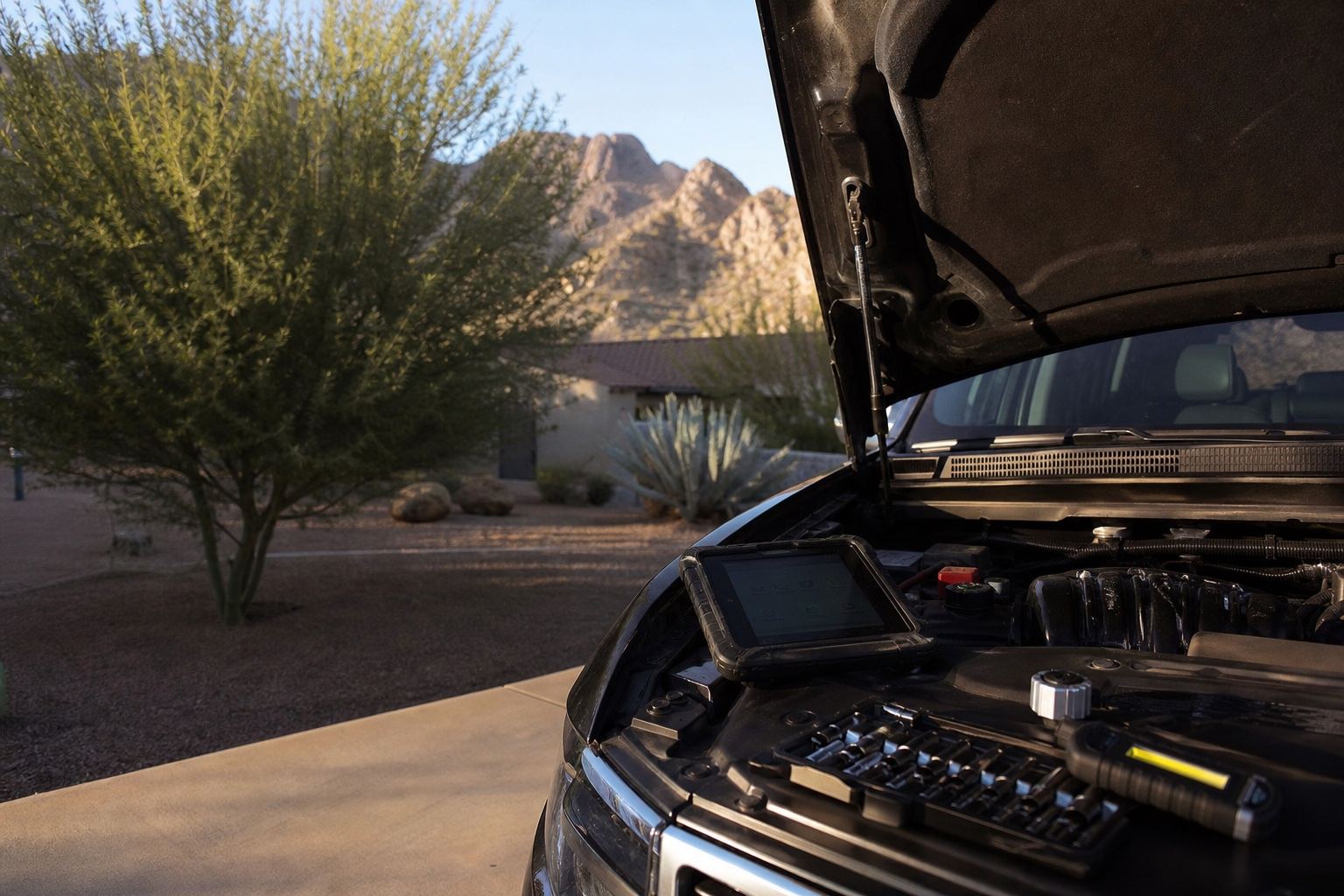
Steady Light or Flashing Light
Steady amber means the computer wrote down a fault and expects a visit: easy throttle, appointment inside the week. Flashing amber means misfire happening right now, raw fuel cooking the catalytic converter with every mile, so park it and call today. That speech has been delivered a few thousand times in this trade, and it has aged better than any tool on the truck.
The dash's other tenants rank differently. Temperature warnings and oil pressure lights outrank whatever you had planned; pull over where it is safe, shut the engine off, then phone. A battery light says the alternator stopped pulling its weight and the car is now spending savings. ABS lamps usually mean one wheel sensor went quiet; brake earlier and softer until someone reads it.
Altitude and Check Engine Codes
A mile of elevation changes what the computer sees. Thin air shifts fuel trims toward the edges of their maps, small evap leaks set codes here that sea-level cars would shrug off, and the sensors doing all this math age faster under the UV and temperature swings. Translation: Front Range check engine lights lean toward small, honest causes more often than the internet's worst-case forums suggest.
That's not a promise your light is trivial; it's a reason to read it properly before buying anything. Codes name circuits, not parts, and the difference between those two words is most of the wasted money in this trade.
When You're Ready for the Fix
This page explains the light; the help page covers how it gets diagnosed and repaired at your curb, evidence first. Between the two, the amber glow should hold no further mysteries, which was always the goal of the counter speech.
What the Check Engine Light Monitors
The check engine system has one legal job: emissions. Every sensor it monitors traces back to how completely the engine burns fuel and what leaves the tailpipe, which is why the light can glow while the car drives beautifully, and why a perfect-feeling car can still flunk its inspection. It says nothing about your brakes, your tires, or the clunk over speed bumps; those complaints go to different departments. Knowing that boundary keeps the panic properly sized. An amber light with no drivability change is a paperwork problem on a deadline, not an emergency, and it deserves a proper reading rather than a weekend of dread.
Start With the Simple Causes
The cheapest fix in this entire trade: a loose or aging fuel cap sets an evap code, the evap code lights the dash, and a morning of worry resolves with a half turn until the click. It happens often enough that the phone intake asks about it, right after the question about recent fuel stops. If the cap was the culprit, the light needs several days of ordinary driving to convince itself and go dark, so do not judge the outcome by the next morning. If it returns after that, the leak is real somewhere in the evap plumbing, and finding it becomes a proper diagnosis instead of a guess.
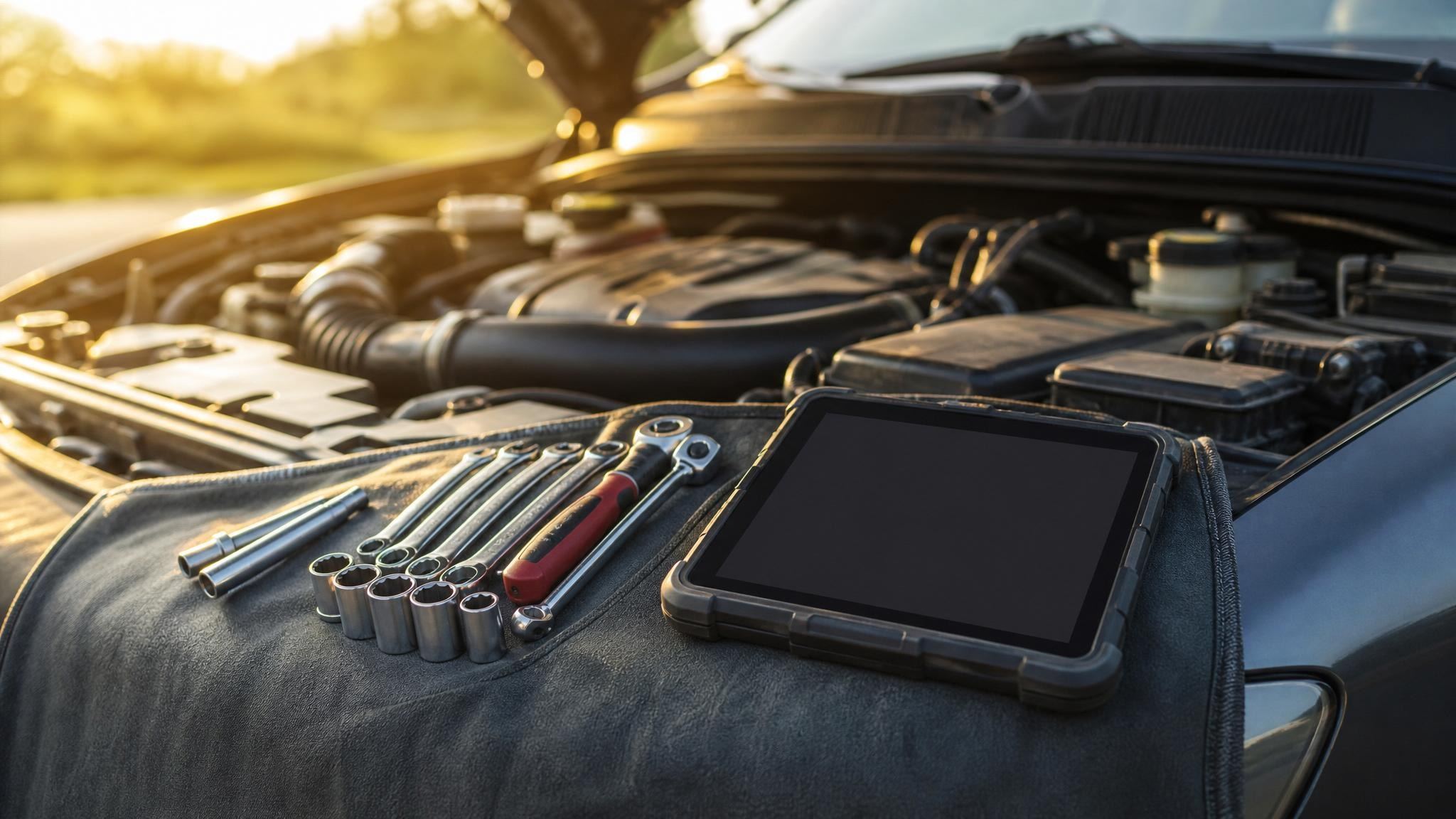
From the bench
Light Came On This Morning?
Steady or flashing decides the timeline. Ring me with which, and the plan arrives before the worry settles in.
Call 720-358-9214